Daily Cleaning Techniques for Braces and Aligners
If you are wearing braces or clear aligners in Sector 37, Faridabad, daily cleaning habits matter more than ever. Brackets, wires, and aligner trays create extra places for food and plaque to hide. Without the right routine, this can lead to white spots, gum swelling, and even cavities around the brackets. The good news is that a few simple tools and techniques can keep your teeth healthy throughout treatment.
Why Braces and Aligners Need Extra Care
Braces have brackets and wires that trap food particles, while aligners cover the entire tooth surface for most of the day. Both situations reduce the natural cleaning action of saliva and tongue movement. Plaque that sits undisturbed for too long releases acids that weaken enamel, which is how white spots and early decay start to form, usually near the gumline or around brackets.
Daily Brushing Technique for Braces
Brushing with braces needs a slightly different angle than normal brushing.
- Use a soft-bristled toothbrush or an orthodontic brush with a V-shaped bristle cut.
- Angle the brush at 45 degrees above and below each bracket to clean both the tooth surface and the metal edges.
- Brush each tooth for a few seconds, moving in small circles rather than scrubbing side to side.
- Do not skip the gumline, since this is where plaque builds up fastest.
Brushing With Aligners
Aligner wearers should brush normally but always before reinserting the tray. Food particles trapped between the tooth and the aligner can sit against enamel for hours, which raises the risk of decay and white spots if skipped.
Flossing With Floss Threaders
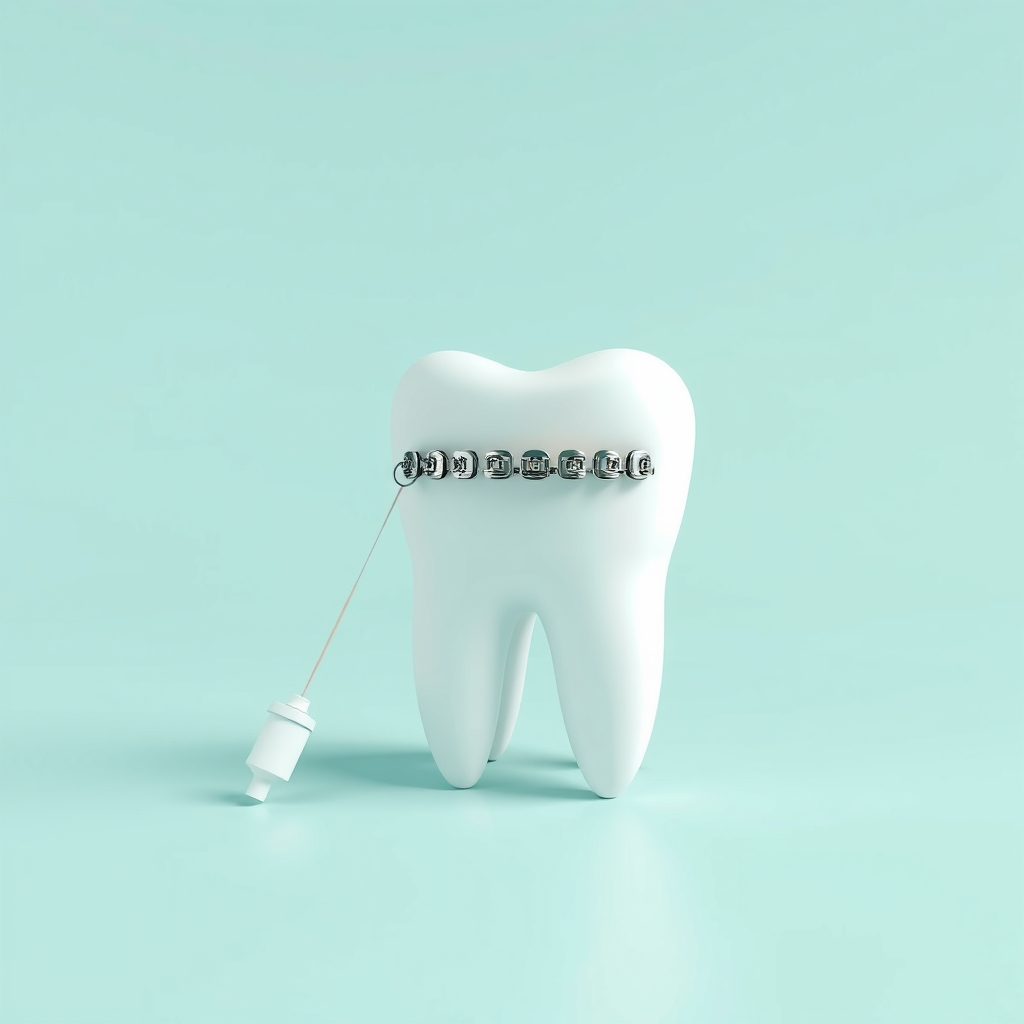
Regular floss cannot pass under an archwire on its own, which is where floss threaders become useful.
- Thread a piece of floss through the loop of the threader.
- Guide the threader under the archwire between two teeth.
- Pull the floss through and gently move it up and down along both tooth surfaces, curving it slightly around each tooth.
- Repeat for each gap, using a fresh section of floss as needed.
This takes a little practice, but most patients get comfortable within a week or two of daily use.
Interdental Brushes for Tight Spots
Interdental brushes are small, cone or cylinder-shaped brushes that slide between brackets and under wires. They are often faster than floss threaders and are especially helpful around larger gaps or where food tends to pack in.
- Choose a brush size that fits snugly without forcing it into the space.
- Insert gently at an angle, moving it in and out a few times.
- Rinse the brush and reuse until the bristles wear down, then replace it.
Many patients use interdental brushes during the day, such as after lunch, and save thorough flossing with a threader for the evening.
Choosing an Orthodontic-Safe Toothpaste
A plain fluoride toothpaste is usually the safest choice during orthodontic treatment. Avoid toothpaste with strong whitening granules or baking soda abrasives, since these can be harsh on brackets and may wear enamel unevenly around the areas covered by brackets. Fluoride remains important because it helps re-harden enamel that has lost minerals, lowering the chance of white spots developing.
Other Helpful Additions
- An alcohol-free fluoride mouth rinse can reach areas a brush may miss.
- A water flosser can rinse out debris before using floss threaders or interdental brushes, making the process quicker.
- Disclosing tablets occasionally show missed plaque spots, which can be useful for improving technique.
A Simple Daily Routine
| Time | Steps |
|---|---|
| Morning | Brush with fluoride toothpaste, rinse aligner tray if used |
| After meals | Rinse mouth with water, use interdental brush if possible |
| Night | Brush thoroughly, floss with threader, rinse aligner tray before reinsertion |
When to Visit Your Dentist
Routine check-ups become more important during orthodontic treatment. Your dentist can spot early white spots, loose brackets, or gum inflammation before they become bigger problems. If you notice persistent bleeding gums, a bad taste near a bracket, or a tooth that looks chalky white, it is worth getting it checked sooner rather than waiting for your next scheduled visit. Patients in Sector 37, Faridabad can reach Mukand Dental Care at 079 4850 0682 to book a cleaning or routine orthodontic check.
Have questions about your teeth?
Mukand Dental Care · Devi Sahai Market, Sector 37, Faridabad
Frequently asked questions
How many times a day should I clean my teeth during orthodontic treatment?
Brush after every meal or snack if possible, at least twice daily, and floss or use interdental brushes once a day, ideally at night before bed.
Are white spots on teeth with braces permanent?
Early white spots caused by mineral loss can sometimes improve with good hygiene and fluoride use, but advanced spots may need professional treatment. Prevention through daily cleaning is far easier than fixing them later.
Can I use a water flosser instead of a floss threader with braces?
Yes, a water flosser can work well around brackets and wires, though many patients find it helpful to combine it with interdental brushes for tighter spots.
Is special toothpaste necessary for braces or aligners?
Not strictly necessary, but a fluoride toothpaste without harsh whitening granules is gentler on brackets and helps protect enamel from white spot formation.
Treatment costs mentioned on this page are indicative ranges for the Sector 37, Faridabad region. Your exact cost depends on your case and will be confirmed after a clinical examination at the clinic.